Dirna arrun (We hold it): Recovering collections for Worrorra dance-song vitality
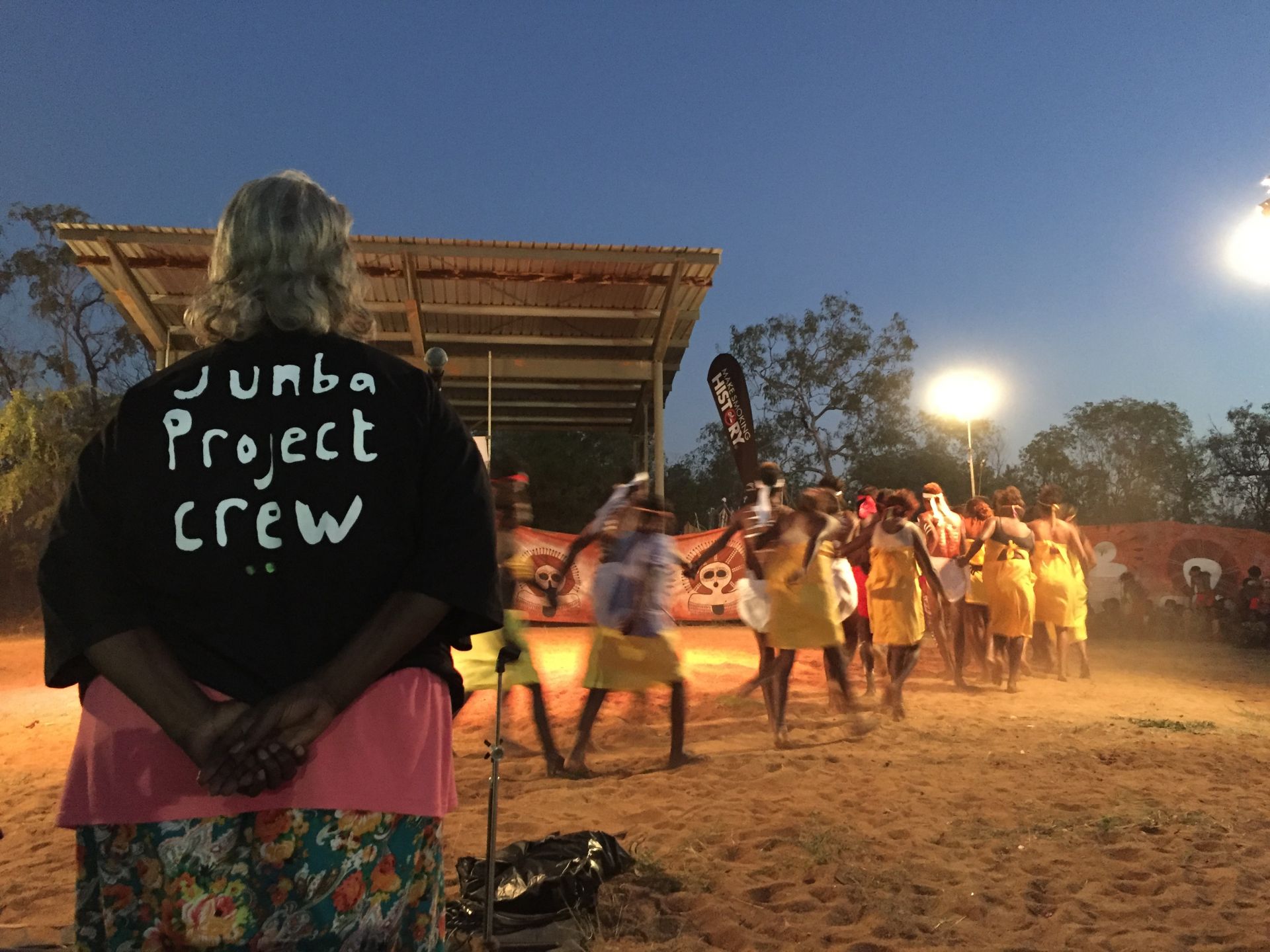
In the 1960s and early 1970s, a group of composers, choreographers, singers and dancers residing in the new community of Mowanjum (later known as ‘Old Mowanjum’) led a resurgence of the dance-song tradition known as Junba.
New compositions and performances served to support co-located Ngarinyin, Worrorra and Wunambal leaders in the community to nourish ties with their respective homelands, establish a new economy, garner broader recognition and societal support, and record and enact critical narratives on the contemporary and historical realities of life in a frontier settler state.
By 2009, the state of the Junba tradition had diminished significantly in number of performers, and repertory and stylistic size and diversity. Elders of the community issued a call for action to revive Junba practice, as a response to a chronic and widely publicised crisis in youth mental health.
This initiative to renourish Junba has seen a three-fold increase in Ngarinyin and Wunambal repertory and diversity, exponential growth in participation, new partnerships, and a new generation of choreographic and singing excellence in Mowanjum.
Until 2023, while substantive audio collections pertaining to Worrorra song have been held, photographic and video materials that contain vital information relating to dance, have been missing or not known. As a result, Worrorra repertories, opportunities for knowledge transmission, and participation in ceremonial and public events are diminished for part of the community with dire ramifications for knowledge of Worrorra territories and regional histories.
At present, only five of some 45 dance-songs from the significant repertory composed by Sam Woolagoodya (recorded by Lucich 1963, Moyle 1968, Treloyn 2000–02, and others) are practiced. Furthermore, none of the similarly sized repertory by Balbangu (recorded by Frobenius Expedition 1938–39, 1952; and Treloyn 2002) is practiced either. In 2022, however, new photographic collections made in the 1960s (Masters, Silverstein) and wax cylinders from 1938–39 (Berlin Phonogramm-Archiv) have been recovered.
The questions now are: what do those recordings contain; and how can they be used?
This project has worked to achieve the following aims:
- Investigate and identify content relating to Worrorra dance-songs in identified archived collections.
- Review photographic collections alongside audio collections to fill gaps in knowledge of Worrorra dance-song repertories.
- Reconstruct the Worrorra dance-songs with choreography for public performance and reentry to the canon.
The project will also involve annotating collections and linking related metadata across collections to address future barriers to community access. This will use the existing tools, ELAN and CCCT v0.9. A final aim is to document workflows and assess the values of these tools to support discovery in the future.
| Investigators: | A/Prof. Sally Treloyn (CI) Dr Reuben Brown (CI) Ms Leah Umbagai (PI) Mr Pete O’Connor (PI) Ms Rona Charles (PI) Mr John Divilli (RA) Mr Folau Umbagai (RA) |
| Organisations: | Mowanjum Art and Culture Centre Dambimangarri Aboriginal Corporation Wilinggin Aboriginal Corporation Berlin Phonogramm-Archiv The University of Melbourne |